Friday, February 25, 2011

Blog Post 7


Randy Pausch

This is the second time I've watched this video and I am still just as inspired as I was the first time.  It is amazing how upbeat he is.  Once he acknowledged the big elephant in the room, I couldn't help but google him.  It just made the next few words I heard from him, mean that much more.  I still can't believe how great of shape he was in, with only a few months left to live.  This healthy looking, upbeat guy, with such a positive outlook on life, passed away a short six months later.  It's crazy how it usually takes someone who was born with a debilitating disease, or someone who knows they only have a few months left, to convince the rest of us to straighten up, look on the bright side, and live for the moment.  They don't sit around and feel sorry for themselves, those of us who are fortunate enough to not have expiration dates do that for them.  The ones that are blessed enough not to have our days numbered are the ones that do nothing with our lives, because we assume that we have a lifetime ahead of us.

He learned from his life experiences.  His football coach, who at the time he thought was being unfair, kept riding him during practice.  I know that everyone feels the same way when teachers and parents are constantly riding their cases.  I am constantly biting my tongue, because I just want to scream, "Why don't you get off my back, because I do ten times as much work as them!"  But like he said (and like I have learned over the past few years), it's never a bad thing, until they stop riding you, because that's when they give up on you.  I will ride my students.  I won't give up on a single one of them. Enthusiasm. Enthusiasm. Enthusiasm. If I could teach my students only one thing, it would be enthusiasm.  For your subject, for your project, for your education, for your life.

The brick wall.  I absolutely love the idea of the brick wall.  Everyone, including me, encounters bricks walls in their lives.  Some, no most, of the brick walls I have encountered, I have just walked away from.  Which let me know that obviously it wasn't that important to me, so I wasn't meant to do it. I like that he didn't tell them at the beginning of the semester that they had already surpassed his expectations, because it would have been an injustice to them.  I think students need to know that they are at least headed in the right direction, but if all they hear is praise, then they'll have no reason to go any further.  I hope that one day a project that I start has an impact as great as his.  That could never have been done with a book and a pencil.  He gave his students limitless possibilities and from that the teacher became the student and they were both able to learn together.  He emphasized the reason that it was so successful was because they had so much freedom.  It was a project-based curriculum, where there were many field trips, hands-on learning, and no reporting to the deans.  Is obvious why it was so successful.  It was exciting.  Who gets excited about a book?   No one.  Who gets excited about a field trip? Everyone.  I hope my class will be similar to this.  OHHH! And the self-reflective bar graphs. Wow. That is just awesome.  I wonder, if there was a bar graph that showed how easy I was to work with, would I be at the top or the bottom?  This whole head-fake thing is also very important. We've learned through this method since we were in little league.  We thought we were simply learning how to  hit a ball, but we were really learning values like perseverance and character.  Learning not to throw the bat down when you got so ticked off because you couldn't hit the ball.  You just kept trying until you could.  So while learning how to hit, throw, and catch a ball, you actually learned many values that you had no idea you were actually learning.  When I teach my students, I want them not only to learn that they must learn the material, but that they must continuously be involved in their learning, and they must be responsible for their learning.  His legacy is learning something hard while having fun. Well I would say that is something worth being proud of.  His parents could be the best teachers ever, especially when it came down to the little things  like letting his imagination run wild by letting him paint his room.  He really is a salesman of education.  And a pretty darn good one.  I want to Be a Tigger! I want to Have Fun! I want to use this in my classroom to headfake my students.  I want their excitement to boil over.  I want them to have so much fun that they have no idea that they are learning anything at all.

C4T #2

Wesley Fryer 

Wesley Fryer is a 21st century digital learner. He gives presentations to students, parents, and teachers about Internet Safety and Digital Citizenship.  He also leads the workshop called Digital Magic Tricks, based on the powerful ingredients for blended learning.

His post about a Conference with Michael Wesch turned on a lightbulb for me.  I know that at the end of the semester I will have the chance to blog about a project that I wish I could have participated in, and I think I found it.  Michael Wesch has encouraged students to create a video of how they view the classroom AVision of Students Today-Call for Submissions (basically a reply to the video A Vision of Students Today, from the students point of view).  This has prompted Wes Fryer to create his own project- Vision for Educational Leadership in 30 Seconds.  This blog post really got some ideas going for me and made me reevaluate what I thought it meant to be a visionary leader in education today.  While I enjoyed all of the videos listed above, I always love watching the one posted below(also found in Fryers post)


He created a post about Funding The Dreams of Students Through The Generation Project.  The Generation Project allows individuals to fund a certain experience for a deserving low income student or school.  Once the individual post their project on Generation Project's website, educators from around the country can apply for their students to participate in these funded projects.  The video provided gives an overview of what has and is being done.  Fryer points out that teachers are always coming in contact with low income students who have a passion but lack the means to further develop it.


I am so thankful that he posted this.  I have already posted it to my Twitter and Facebook in hopes that someone who can help, will.  I, too, was a low income student that without the help of donations from local businesses I would have never had the opportunity to attend a leadership conference at UCLA.  Hopefully, this program will continue to build so that one day I can help fund the dreams of low-income students, just as others have done for me.

Wesley Fryer has more than a few inspirational posts and he is the second 21st century learner that I intend to follow even after EDM 310.

Summary Post CK 1,2, & 3

Nicole

Is in Ms. Lugrin's 6th grade class.  She posted about going on a class field trip to Asessippi for a skiing trip.  This was her fourth time to go snowboarding.  I told Nicole that I haven't been as may times as she had, but after reading her exciting story I can't wait to go back.

Sidney

She is currently in Ms. St Pierre's 5th grade class at Terryville Elementary School in New York.  Sidney updated her blog while she was on her way to Florida for the second time.  She looked forward to laying out and drinking smoothies, while she dealt with being surrounded by loud babies on the plane.  I told her that she should visit Alabama one day.  I also told her that she may have a future in writing because I never had the ability to write a story that exciting when I was in fifth grade.  I was thoroughly impressed with her writing skills and encouraged her to keep blogging in order to improve her talents.

Logan

He attends Pt England School and is currently in Ms. Helen Squires Grade 5 class.  He posted about what he did over the holiday. He went swimming at YMCA, spent time with his mom and brother, and watched television.  I told him I had never been to the YMCA but I hope that I have as much fun as he did if I ever get the chance to go.

Timetoast Project

Blog Post 6

The Networked Student

This video gave me a good idea of how to get expand on my PLN.  The networked student and I have done some of the same things as far as researching for certain articles, blogs, and websites that pertain to my future area of expertise.  I still haven't necessarily figured out how to use itunesU to my advantage but I'm working on it, it's still really cool o know that I can take part in a lecture from a professor at Berkeley.  I like how it pointed out why teachers are needed, because I often find myself on the fence when I am reading all of this information on why we don't need the classroom to learn or teach.  When I decided to become a teacher I never dreamed of my self as a guide to the outside world (well to an extent I did but not as much as I have seen lately).  It is still hard to disassociate myself from the schema of 20th century teaching-lecturing in front of the classroom.  Hopefully I will find the right balance, because I know that I, alone, cannot fully prepare them for their world ahead. But, with technology, my guidance, and my enthusiasm, I know I will be able to give them everything they deserve.

A 7th grader's PLN

I like how she pointed out that this way of learning gave her so much freedom that she felt the responsibility.  She can choose how she wants to learn, and when.  Before EDM310, I had never heard of such a thing, but the benefits should be enough to convince the skeptics.  I had forgotten how beneficial evernote, delicious, and symbaloo could be. I plan on using them in the future (I'm sure it will be much better than me taking screen shots of EVERYTHING I like then having my computer screen getting filled up everyday).


Smartboard Debate

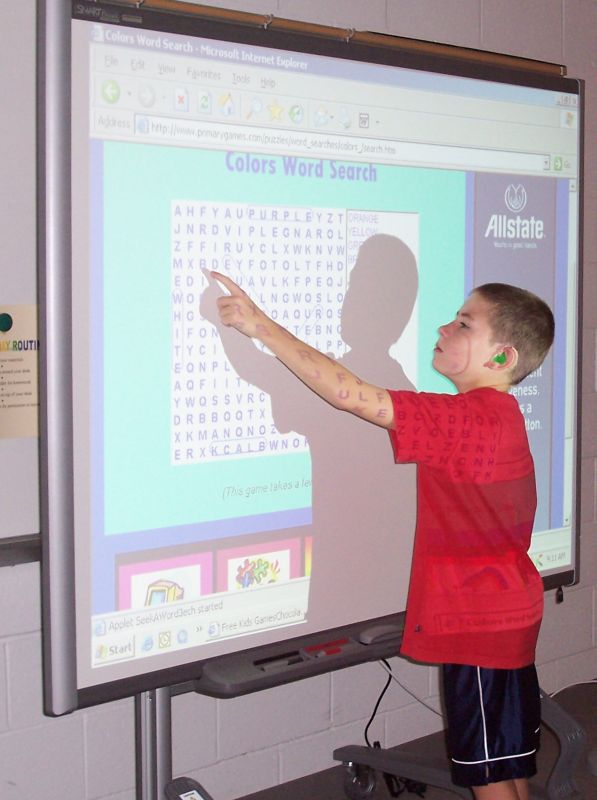
student using smart board


Cathie  claimed that students' level of motivation and engagement had increased with the use of smartboards.


Silvia Tolisano shows us how the smartboard can help utilize Bloom's Taxonomy for the 21st century.


Bill Ferriter claims smartboards only:
  • reinforce a teacher-centric model of learning
  • attempt to move digital teacher-dinosaurs into the light. I ask you: Do we really want to spend thousands of dollars on a tool that makes stand-and-deliver instruction easier
  • without time and training, they quickly become nothing more than really expensive overhead projectors.
Michael Staton says that smartboards
  • don’t change the model that’s broken. They just make that model way more expensive.
  • are an administrative cop out. Administrators like Smartboards because when they spend money on technology they need to spend a lot of it and it needs to be on things they can point to and count.
So after reading all of these blogs and articles, I am still not fully convinced of the benefits of smartboards.  I believe they can be used effectively IF the teacher is well trained and constantly looks for innovative ways to use it.  I asked my younger brother about the Smartboards in his classroom (the high school recently put smartboards in every classroom), and he said "they're really cool, they have lots of games and stuff."  But they rarely use them.  I said "so, basically they use them just like overhead projectors," he defensively stated "I said they were cool, OKAY."  He may think they're cool, but he said they don't play any educational games, students don't go up to the smart boards,  and they don't explore the web.  The teacher stands there, touches the screen and talks.  It may have my brother's attention because it's big and shiny, but unless the teacher effectively uses the interactive white board, it is a big waste of time and money for the education system. Hopefully the whiteboard project will change my mind, but at this point in time I remain unconvinced of the benefits of smartboards.

    Friday, February 18, 2011

    Blog Post 5 Podcasting

    Eagles Nest Radio

    Wow.  I never knew a group of third graders could be so articulate.  They very creatively collaborated a podcast about Ancient Rome.  The students took turns taking part in the podcast which kept it exciting for the viewer (and the students I'm sure).  Not only did they put together an entertaining flow of information, but you better believe they learned a lot on the way.  When it is exciting for the students, then they are more likely to remember the information and the experience, and this is one I'm sure they won't soon forget.

    Langwitches

    Silvia Tolisano is a 21st Century Learning Specialist, her blog helps people understand the benefits of blogging, glogging, skyping, wiki-ing, podcasting, and so on.  I found on of her posts to be very helpful, it actually showed the process that the children go through in order to create a podcast.  Until this post I never fully appreciated the amount of creativity and the advanced thought processes students must use in order to make a podcast come to life. The students took turns writing suggestions about the subject of the podcast on the smart board, the image of the list was then uploaded to their class blog where each student was asked to write a paragraph about the possible story lines.  The class then voted on the subject planets, split up into groups, created individual audio segments, collaboratively pieced the audio clips together in Garage Band (after they were able to "play" with the program and learn about tracks, background music, splitting, editing music, etc.), then were finally able to complete their educational journey by producing a podcast.

    Just the sheer amount of creativity these students were able to use in this ONE project amazes me.  Not to mention the many, many, forms of technology they used in oder to do so.  I have never seen such a good example of a use of technology such as this one.  The students fell in love with this process, and learned so many skills along the way.  We can gladly honor their efforts as

    • storytellers
    • collaborative team members
    • creative writers
    • producers
    • directors
    • audio editors
    • podcasters
    The following picture shows the vast amount of skills students can improve through the use of podcasting, and I will admit until this post I wasn't fully convinced of the creative benefits.  But this is just the beginning, new programs are being created everyday,  If we can use them all together in a fun project such as this one, students will learn so many skills as well as use all of their creativity. 


    skills-podcasting.png

    (If you still aren't convinced, this is a great blog to check out!)


    Joe Dale points out the fact that the group of students being taught today have never been accustomed to a life without technology, so something such as podcasting is familiar to them. Two benefits he points out in the beginning, I believe are especially important to the learning process. Differentiation-if students sit in a classroom day after day copying notes from a lecturing teacher, they will soon lose interest and therefore retain less.  Another great thing he pointed out was the fact that through Project-based learning (like the example from the Langwitches blog), podcasting can become more students centered.  This is by far the best approach!  Students are then able to engage in the process and fully immerse themselves into the podcast.  Before I had always thought the main benefit of podcasting, was for those students who miss school (I know I would have used for that!), but I'm starting to see thats not the most important thing it offers.  By far, I believe that project-based podcasting that is student centered is the best benefit of podcasting.  The higher order learning skills and creativity used through project based podcasting is unbelievable.


    iPods are no longer just used for listening to music.  This site lists the many study guide programs, podcasts and audio books, tutorials, applications, tools, and sites that will help you use your iPod more effectively while learning.


    Is a decent link for teachers just starting to embrace the world of podcasts. If you still aren't convinced about the benefits of podcasting here are just a few:  
    • It’s a cool way to have interactive communication
    • Education can be advanced beyond the classroom
    • Parents can download students’ work
    • Available 24/7
    • Students can make up missed classes
    • Appeals to auditory learners
    • Portable learning
    • Students can enhance their communication skills
    She also gives a list of Tips to Succeed:

    1. Make sure you spend enough time learning Audacity (or the software you use) to feel comfortable with it.
    2. Give students a choice of topics
    3. Let students pick the people they want to work with
    4. Have some exemplary podcasts for them to listen to
    5. Include a list of criteria for research
    6. Allow plenty of time to complete the project.  Everything takes longer than you think it will!
    7. Invite the principal, department chairperson, or some other person to come in and see the presentations.  Students will be very proud of their work.


    These were all very helpful sites, but Langwitches is a great place to start with your podcast education!

    Timetoast Project

    The Life and Times of Paige Bryant