Friday, February 25, 2011

Blog Post 6

The Networked Student

This video gave me a good idea of how to get expand on my PLN.  The networked student and I have done some of the same things as far as researching for certain articles, blogs, and websites that pertain to my future area of expertise.  I still haven't necessarily figured out how to use itunesU to my advantage but I'm working on it, it's still really cool o know that I can take part in a lecture from a professor at Berkeley.  I like how it pointed out why teachers are needed, because I often find myself on the fence when I am reading all of this information on why we don't need the classroom to learn or teach.  When I decided to become a teacher I never dreamed of my self as a guide to the outside world (well to an extent I did but not as much as I have seen lately).  It is still hard to disassociate myself from the schema of 20th century teaching-lecturing in front of the classroom.  Hopefully I will find the right balance, because I know that I, alone, cannot fully prepare them for their world ahead. But, with technology, my guidance, and my enthusiasm, I know I will be able to give them everything they deserve.

A 7th grader's PLN

I like how she pointed out that this way of learning gave her so much freedom that she felt the responsibility.  She can choose how she wants to learn, and when.  Before EDM310, I had never heard of such a thing, but the benefits should be enough to convince the skeptics.  I had forgotten how beneficial evernote, delicious, and symbaloo could be. I plan on using them in the future (I'm sure it will be much better than me taking screen shots of EVERYTHING I like then having my computer screen getting filled up everyday).


Smartboard Debate
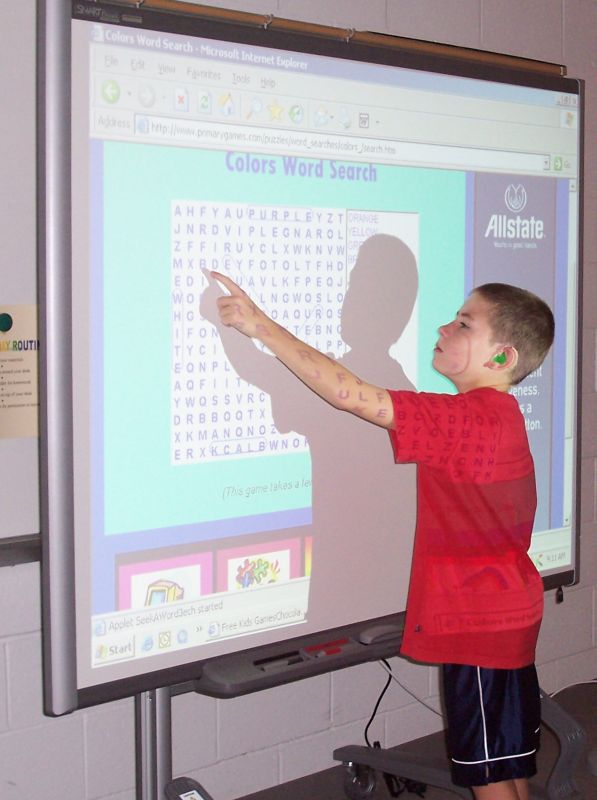
student using smart board


Cathie  claimed that students' level of motivation and engagement had increased with the use of smartboards.


Silvia Tolisano shows us how the smartboard can help utilize Bloom's Taxonomy for the 21st century.


Bill Ferriter claims smartboards only:
  • reinforce a teacher-centric model of learning
  • attempt to move digital teacher-dinosaurs into the light. I ask you: Do we really want to spend thousands of dollars on a tool that makes stand-and-deliver instruction easier
  • without time and training, they quickly become nothing more than really expensive overhead projectors.
Michael Staton says that smartboards
  • don’t change the model that’s broken. They just make that model way more expensive.
  • are an administrative cop out. Administrators like Smartboards because when they spend money on technology they need to spend a lot of it and it needs to be on things they can point to and count.
So after reading all of these blogs and articles, I am still not fully convinced of the benefits of smartboards.  I believe they can be used effectively IF the teacher is well trained and constantly looks for innovative ways to use it.  I asked my younger brother about the Smartboards in his classroom (the high school recently put smartboards in every classroom), and he said "they're really cool, they have lots of games and stuff."  But they rarely use them.  I said "so, basically they use them just like overhead projectors," he defensively stated "I said they were cool, OKAY."  He may think they're cool, but he said they don't play any educational games, students don't go up to the smart boards,  and they don't explore the web.  The teacher stands there, touches the screen and talks.  It may have my brother's attention because it's big and shiny, but unless the teacher effectively uses the interactive white board, it is a big waste of time and money for the education system. Hopefully the whiteboard project will change my mind, but at this point in time I remain unconvinced of the benefits of smartboards.

    Friday, February 18, 2011

    Blog Post 5 Podcasting

    Eagles Nest Radio

    Wow.  I never knew a group of third graders could be so articulate.  They very creatively collaborated a podcast about Ancient Rome.  The students took turns taking part in the podcast which kept it exciting for the viewer (and the students I'm sure).  Not only did they put together an entertaining flow of information, but you better believe they learned a lot on the way.  When it is exciting for the students, then they are more likely to remember the information and the experience, and this is one I'm sure they won't soon forget.

    Langwitches

    Silvia Tolisano is a 21st Century Learning Specialist, her blog helps people understand the benefits of blogging, glogging, skyping, wiki-ing, podcasting, and so on.  I found on of her posts to be very helpful, it actually showed the process that the children go through in order to create a podcast.  Until this post I never fully appreciated the amount of creativity and the advanced thought processes students must use in order to make a podcast come to life. The students took turns writing suggestions about the subject of the podcast on the smart board, the image of the list was then uploaded to their class blog where each student was asked to write a paragraph about the possible story lines.  The class then voted on the subject planets, split up into groups, created individual audio segments, collaboratively pieced the audio clips together in Garage Band (after they were able to "play" with the program and learn about tracks, background music, splitting, editing music, etc.), then were finally able to complete their educational journey by producing a podcast.

    Just the sheer amount of creativity these students were able to use in this ONE project amazes me.  Not to mention the many, many, forms of technology they used in oder to do so.  I have never seen such a good example of a use of technology such as this one.  The students fell in love with this process, and learned so many skills along the way.  We can gladly honor their efforts as

    • storytellers
    • collaborative team members
    • creative writers
    • producers
    • directors
    • audio editors
    • podcasters
    The following picture shows the vast amount of skills students can improve through the use of podcasting, and I will admit until this post I wasn't fully convinced of the creative benefits.  But this is just the beginning, new programs are being created everyday,  If we can use them all together in a fun project such as this one, students will learn so many skills as well as use all of their creativity. 


    skills-podcasting.png

    (If you still aren't convinced, this is a great blog to check out!)


    Joe Dale points out the fact that the group of students being taught today have never been accustomed to a life without technology, so something such as podcasting is familiar to them. Two benefits he points out in the beginning, I believe are especially important to the learning process. Differentiation-if students sit in a classroom day after day copying notes from a lecturing teacher, they will soon lose interest and therefore retain less.  Another great thing he pointed out was the fact that through Project-based learning (like the example from the Langwitches blog), podcasting can become more students centered.  This is by far the best approach!  Students are then able to engage in the process and fully immerse themselves into the podcast.  Before I had always thought the main benefit of podcasting, was for those students who miss school (I know I would have used for that!), but I'm starting to see thats not the most important thing it offers.  By far, I believe that project-based podcasting that is student centered is the best benefit of podcasting.  The higher order learning skills and creativity used through project based podcasting is unbelievable.


    iPods are no longer just used for listening to music.  This site lists the many study guide programs, podcasts and audio books, tutorials, applications, tools, and sites that will help you use your iPod more effectively while learning.


    Is a decent link for teachers just starting to embrace the world of podcasts. If you still aren't convinced about the benefits of podcasting here are just a few:  
    • It’s a cool way to have interactive communication
    • Education can be advanced beyond the classroom
    • Parents can download students’ work
    • Available 24/7
    • Students can make up missed classes
    • Appeals to auditory learners
    • Portable learning
    • Students can enhance their communication skills
    She also gives a list of Tips to Succeed:

    1. Make sure you spend enough time learning Audacity (or the software you use) to feel comfortable with it.
    2. Give students a choice of topics
    3. Let students pick the people they want to work with
    4. Have some exemplary podcasts for them to listen to
    5. Include a list of criteria for research
    6. Allow plenty of time to complete the project.  Everything takes longer than you think it will!
    7. Invite the principal, department chairperson, or some other person to come in and see the presentations.  Students will be very proud of their work.


    These were all very helpful sites, but Langwitches is a great place to start with your podcast education!

    Timetoast Project

    The Life and Times of Paige Bryant

    Sunday, February 13, 2011

    My Sentence Movie


    Blog Post 4

     Don't Teach Your Kids This Stuff. Please? 
     It is time for this message to be heard everywhere. What do most parents and teachers hear about the most? The bad things, such as children being abducted because of social networking sites, and sexting, and porn surfing, and cyberbullying. But what they dont hear is what they refuse to listen to. They choose to ignore the many benefits we receive from using technology because they are set in their way of thinking that the benefits are overshadowed by technology’s downfalls. If they would just give it a chance and trust their children and students then they might realize that it is worth it, and that there is a whole new world out there just waiting for someone to use it. Dr. McCleod is the director of CASTLE which focuses on the technological needs of educators.  He has received many awards for his efforts to utilize technology within the learning realm.   


    The iSchool Initiative
    One of the my favorite uses of the iSchool is the ability to keep up with all assignments and all due dates in one area.  Yes, there are planners for this, but sometimes students are in too big of a hurry to take the time to write it all down.  If all of your class assignments were automatically entered in for you in one place, it would be a lot easier on everyone.  Aside from all of its amazing educational benefits, there is the fact that we will cut down on our school systems debt by not buying books, papers, pencil, maps, projectors, etc.  The total accountability that iSchool provides is unheard of before now.  Students now have no excuse to say "well I didn't hear you say it was due the next day" because it is right there with you, with all of your assignments/due dates at all times.  The fact that internet websites are limited to those that are dedicated to education-only assures the fact that this is a learning tool that cant be used to facebook in class, or anything else that the internet I used for that lets students escape the educational realm.  The best thing about this is that it isn't some futuristic dream, it is possible now.  I can only hope that my future school will be on board with this technology.  Teachers, students, and schools can be taking apart of this amazing program right now.  Together, we can all improve the accountability and performance of our education system. 


    Watch The Lost Generation


    .First of all, this video's technique is amazing.  If we were just to have simply read it backwards, then we would certainly not have gotten the same effect.  It was inspiring. With technology, she was able to take such a simple message and make such a big impact.  I do believe that sometimes we are told that we are a lost generation. Even my grandparents have said it to me.  But I refuse to believe it, just as she did.  We will make a difference, we will keep our morals, and we will not turn into money hungry cold hearted human beings that only care about ourselves.  We, as a generation,  will prove them wrong.


     Eric Whitacre’s Virtual Choir
    Technology. Wow.  If you would have told me to orchestrate an entire choir, I would have probably said, there is no possible way.  But, with technology we have surpassed anyone's expectations and done the impossible.  Getting hundreds of people to sing together while face to face is a feat in itself, but I would have never believed it were possible for this to happen with out any of the choir members ever meeting.  With the help of technology we have been able to complete something as amazing as this, I can't wait to see what technology will help us achieve in the future.


    Teaching in the 21st Century.
    "Teachers are no longer the only source of information.  We are the filter".  This is so true, we should use this to our advantage.  We as teachers should guide our students through their journey so that once we are no longer with them they will be able to do it on their own.  We must refuse to do it for them any longer.  We must teach them how to survive without us, how to learn without us.   I am no saying I am against teaching some facts and content, but if we were to teach our students lifelong skills then they would be successful long after they left our classroom.  Life is not a multiple choice test.  So why should we expose our students to them.  They have no meaning. They have no power of helping them after they pass that class.  Life is an ever changing journey.  They will need to overcome obstacles by using their critical thinking SKILLS.  They can't look back at their notes from class to see how to deal with their problems, but they can use the skills that we equip them with to answer any of the problems that life may throw at them.  So yes, we do need to rethink the tools and sources we use to teach and constantly reevaluate what are we teaching our students and why? How is it helping them?  How is it preparing them?  One thing that I have encountered in college, that I had never used in high school, is online access to the classroom.  I may sit there and stare at the power points for the entire class period and still not understand what is going on, but now that I do my homework online and have access to videos and tutorials that present the material in different forms I can easily understand the message that the professor couldn't necessarily get across to me with just a lecture.  "The tools provide temptation but they are not the source of the negative behavior" Exactly.  Guns don't kill people. People kill people.  The internet doesn't corrupt.  People corrupt.  But we must believe our students will use the tools we have equipped them with, and use them to tackle their issues. Every thing we teach must be relevant, challenging, and engaging.  We want them to grow from their experiences, and we want them to want to learn.  So what does it mean to teach? Well, it sure as heck doesn't mean A, B,C, or D.  In order to teach we must equip our students with the life skills needed to learn, live, and overcome any obstacles they may encounter.  As teachers THAT is our job.

    Sunday, February 6, 2011

    C4T 1

    Jen Deyenberg, a primary teacher, is a Canadian that currently resides in Scotland. Her two previous posts included many interesting links. One of her post included links to websites with information about:
    _Anglo Saxons – a great resource written in student friendly language with photos, facts, and even a section on what life was like for children. It also includes an Interactive Dig it Up game where you act as an archaeologist to dig up artefacts from the time period.
    _Children of Victorian Britain – facts, images, and a timeline, through the eyes of children. The sections about children working in factories and mines are especially interesting.
    _Children of WW2 – Be sure to check out the time capsules activity – a great way to see what life was really like.
    _Scotland’s History – a Learning and Teaching Scotland website with links to:
    _Scots and Canada – Immigration and influence of Scots in Canada
    _Scots and Australia – Immigration and famous Scots in Australia
    _Scotland and the Abolition of the Slave Trade – a resource recognizing Scotland’s role in the slave trade and in its abolition
    _Scotland’s History Timeline – a timeline of Scottish history – the idea and images are excellent – but the display is a bit hard to navigate
    _UK War Cabinet – A real time twitter simulation – “Watch WWII unfold 70 years to the day through original Cabinet Papers from 1941 held at The National Archives.”
    _Battlefield Academy – a battlefield simulation, fighting as British soliders in one of four battles (Roman, Medieval, Napoleonic, and WWII).
    Built by the BBC in consultation with the Royal Military Academy, Sandhurst
    _British History Timeline – an interactive timeline of British History. You can sort by England, Wales, Northern Ireland, Scotland, or see all British events. The time spans from Neolithic to present times.
    _Scotland’s Stories – a collection of myths and legends from Scotland. How many legends are based in history. Combine storytelling and history with this resource.
    _Horrible Histories – Terrible Tutors & Measly Middle Ages Games
    Explore, talk to characters from the time periods and solve the puzzle – fabulous immersive historical learning environment.

    I especially appreciated the Children of Victorian Britain and the Children of WW2. I just know that information like the ones in these links are what got me interested in history in the first place. I hope that by showing my students information about how their ancestors lived that they too will learn to love history.

    Her secong post included links to informational sites about The Romans, Pompeii and Herculaneum, The Egyptians, The Greeks, China, Scotland and the UK, Canada, First Nations People of North America.

    Once again links like "First People of North America" would have the ability to get students interested about their ancestors. Links like Pompeii will get students interested in how amazing history is. I hope once I start teaching that I can use links like these to excite my students and bring history to life for them, just as it is for me.

    Blog Post 3

    1. A Vision of Students Today

    I don't know any of my friends that don't have a laptop, facebook, twitter, etc. So wouldn't it make sense to reach our students through these same portals. Once we introduce them to new tools to learn, not only will their attention span improve, but the amount of knowledge they will retain will improve.

    2. It's not about the Technology

    I completely agree with Ms. Hines on the fact that all teachers must be willing to be life-long learners. I also agree with the fact that its great to have all of these high tech machines inside the classroom, but what is the point of even having them if teachers use something such as a smartboard in the exact same way they use white or blackboards. We cant use technology as a crutch. We must know how to function with out technology, we must know how to teach without technology.


    3. Is It Okay To Be A Technology Illiterate Teacher?

    What exactly does it mean to be technologically illiterate? Do you know? Because I don't. I don't think someone learns how to master a certain number of technological skills and is then considered to be technologically literate. But we can always strive to be as technologically literate as possible. If not that, we can strive to not be considered illiterate. Our society is quickly becoming more and more dependant upon technology, and if we don't learn what we can while we can, our students will be the ones "schooling" us.